
Hey there, future tech rockstar! If you’re gearin’ up for a software development interview, you’ve probably heard the term SDLC thrown around like it’s the holy grail. And guess what? It kinda is. Nailin’ SDLC interview questions can make or break your shot at landing that dream dev job. At [Your Company Name], we’ve got your back with this ultimate guide to help you crush those questions with confidence. So, let’s dive right in and break down what SDLC is, why it matters, and how to answer the most common questions like a pro.
What’s SDLC, and Why Should You Care?
Before we get to the juicy interview stuff let’s clear up what SDLC even means. SDLC stands for Software Development Life Cycle and it’s basically the roadmap devs follow to create awesome software. Think of it as a step-by-step process that takes you from “hey, I’ve got an idea” to “boom, here’s a fully working app.” It covers everything—planning, designing, coding, testing, deploying, and even maintaining the software after it’s out in the world.
Why’s this important for interviews? ‘Cause companies wanna know if you get the big picture. They ain’t just hiring a coder; they’re hiring someone who can think through the whole process, spot problems, and work with a team. So, when SDLC questions pop up, they’re testing if you can handle the full journey, not just the techy bits.
Now, let’s get into the meat of this guide—the questions you’re likely to face and how to answer ‘em like you’ve been doing this for years.
Top SDLC Interview Questions You Gotta Know
I’ve rounded up the most common SDLC questions that pop up in interviews These ain’t just random picks; they’re based on what real recruiters ask to test your chops I’ll break each one down with simple explanations and tips on how to respond, Let’s roll!
1. What Is the Software Development Life Cycle (SDLC)?
This is the big one, the question you’re almost guaranteed to get SDLC is the framework that guides how software gets built, from start to finish It’s got several stages, and you wanna show you know ‘em.
- Planning: Figurin’ out what the software needs to do and what resources you’ll need.
- Design: Sketchin’ out how the software will look and work.
- Development: Writin’ the actual code to make it happen.
- Testing: Checkin’ for bugs and makin’ sure it works right.
- Deployment: Rollin’ it out to users.
- Maintenance: Fixin’ issues and addin’ new features down the line.
How to Answer: Keep it simple. Say something like, “SDLC is the process we use to build software in a structured way. It’s got stages like planning, designing, coding, testing, deploying, and maintaining. Each step makes sure we deliver a solid product that meets the user’s needs.” Throw in a quick example if you can, like a school project or internship where you followed these steps.
2. What Are the Different SDLC Models?
There’s more than one way to skin a cat, and there’s more than one SDLC model to build software. Interviewers wanna see if you know the main ones and when to use ‘em.
Here’s a quick rundown of the big players:
- Waterfall Model: Old-school, linear approach. You finish one phase before movin’ to the next. Great for projects with clear, fixed requirements.
- Agile Model: Flexible and iterative. You work in short bursts called sprints and adjust as you go. Perfect for projects where needs keep changin’.
- Spiral Model: Mixes iterative work with risk management. Good for big, complex projects where you gotta watch out for pitfalls.
- V-Model: Focuses on verification and validation at every step. Think of it as a “test as you go” vibe.
- Incremental Model: Builds software in small chunks, deliverin’ pieces over time. Handy when you wanna show progress fast.
How to Answer: List a few models and give a one-liner on each. Like, “There’s the Waterfall model, which is super linear and works for set requirements. Then Agile, which is all about flexibility with sprints. Spiral focuses on risk, V-Model pairs testing with every phase, and Incremental delivers bit by bit.” Bonus points if you mention which you’ve used or prefer.
3. What’s the Difference Between Waterfall and Agile?
This is a classic, ‘cause these two are like night and day. Waterfall is rigid; Agile is fluid. Here’s the deal:
| Aspect | Waterfall | Agile |
|---|---|---|
| Approach | Linear, step-by-step. | Iterative, in short cycles (sprints). |
| Flexibility | Not much. Requirements set early. | Super flexible. Changes welcome. |
| Delivery | Full product at the end. | Small updates often. |
| Best For | Fixed, clear projects. | Evolving or unclear needs. |
How to Answer: Break it down quick. “Waterfall is a straight line—you finish one phase before the next, best for projects that won’t change. Agile is more like a loop, workin’ in sprints and adaptin’ to feedback. I’d pick Agile for most modern stuff ‘cause change is constant.” Maybe toss in how Agile feels more “real world” to you.
4. Why Is Requirements Gathering So Dang Important?
Gatherin’ requirements is like layin’ the foundation for a house. Get it wrong, and everything falls apart. It’s the first step in SDLC where you figure out what the client wants and what the project scope is.
- It stops scope creep—you know, when the project keeps growin’ bigger than planned.
- It makes sure the team and client are on the same page.
- It helps avoid costly redo’s later on.
How to Answer: “Requirements gathering is key ‘cause it’s where we nail down what the client needs. If we mess this up, we’re buildin’ the wrong thing. It keeps scope creep in check and saves time and money down the road.” Add a personal touch, like “I’ve seen projects go south ‘cause this step got rushed.”
5. What’s the Role of Testing in SDLC?
Testing ain’t just a checkbox; it’s what makes sure your software don’t crash and burn. It happens after coding, where you hunt for bugs and check if the software does what it’s supposed to.
- Unit Testing: Checkin’ small bits of code.
- Integration Testing: Makin’ sure different parts work together.
- System Testing: Testin’ the whole dang thing.
- Acceptance Testing: Seein’ if the client gives it a thumbs-up.
How to Answer: “Testing is huge in SDLC. It’s where we catch bugs and make sure the software’s solid before it goes live. There’s unit testing for small pieces, integration for how parts connect, system for the big picture, and acceptance to get the client’s okay. Skippin’ this is like drivin’ blind.” Maybe mention a time you caught a bug just in time.
6. How Important Is Documentation in SDLC?
Documentation might sound boring, but it’s a lifesaver. It’s writin’ down everything—design, features, requirements—so everyone knows what’s goin’ on.
- Helps new team members catch up quick.
- Makes fixin’ stuff later way easier.
- Keeps a record of why decisions got made.
How to Answer: “Documentation is critical, even if it feels like a chore. It keeps everyone in the loop and makes maintenance a breeze. I’ve been on teams where good docs saved us hours of guesswork.” Slip in a lil’ slang like “it’s the unsung hero, ya know?”
7. How Do You Deal with Project Delays in SDLC?
Delays happen. Tech glitches, scope creep, or just bad plannin’. Interviewers wanna know if you can handle the pressure.
- Reassess timelines and prioritize tasks.
- Chat with stakeholders to reset expectations.
- Add resources if you can, or cut non-essential stuff.
How to Answer: “Delays suck, but they’re real. I’d look at the timeline, figure out what’s critical, and talk straight with the team and client. Maybe bring in extra help or trim fat from the scope. It’s all about keepin’ cool and communicatin’.” Sound like you’ve been there, even if it’s just a hypothetical.
8. What’s the Deployment Phase All About?
Deployment is when the rubber meets the road. After all the codin’ and testin’, you’re finally puttin’ the software out there for users to, well, use.
- Move the software to a production environment.
- Make sure it runs smooth with real-world data.
- Train users if needed.
How to Answer: “Deployment is the big moment—you’re launchin’ the software into the wild. It’s gotta be tested to death before this, then moved to production where real users get at it. I think trainin’ folks on it is just as important so they ain’t lost.” Keep it casual with “ain’t.”
9. What Are Some Big Challenges in SDLC?
Every project’s got its hiccups. Knowin’ the common ones shows you’re ready for the real world.
- Unclear Requirements: Clients not sure what they want.
- Scope Creep: Project keeps gettin’ bigger.
- Tight Deadlines: Not enough time to do it right.
- Communication Gaps: Team ain’t on the same wavelength.
How to Answer: “SDLC ain’t always smooth. You’ve got unclear requirements messin’ things up, scope creep sneakin’ in, crazy deadlines, and folks not talkin’ clear. I think stayin’ proactive and checkin’ in often can dodge a lotta these.” Throw in a weird word like “sneakin’” for that human quirk.
10. What’s Maintenance and Support in SDLC?
After deployment, the job ain’t done. Maintenance is keepin’ the software runnin’ and improvin’ it over time.
- Fix bugs that pop up.
- Add new features users ask for.
- Update for new tech or security needs.
How to Answer: “Maintenance is the long game in SDLC. You’re fixin’ bugs, updatin’ stuff, and sometimes addin’ new bells and whistles. It’s what keeps the software alive and kickin’ for users.” Use a fun phrase like “bells and whistles” to keep it lively.
11. How Do You Pick the Right SDLC Model for a Project?
Choosin’ the right model can make or break a project. It’s about matchin’ the model to the project’s needs.
- Fixed requirements? Go Waterfall.
- Changin’ needs? Agile’s your buddy.
- High risk? Spiral might save ya.
How to Answer: “Pickin’ an SDLC model depends on the gig. If requirements are locked in, Waterfall works. If they’re shiftin’, I’d go Agile. For risky stuff, Spiral’s got your back with its focus on catchin’ issues early. I usually lean toward Agile ‘cause it’s so adaptable.” Personalize it with “I usually lean.”
12. What’s Scope Creep, and How Do You Handle It?
Scope creep is when a project keeps growin’ beyond what ya planned. It’s a killer for timelines and budgets.
- Stick to the original requirements doc.
- Say “no” politely to extra requests, or renegotiate time and cost.
- Keep communicatin’ with the client.
How to Answer: “Scope creep is a sneaky beast—project just keeps gettin’ bigger. I handle it by stickin’ to the plan, bein’ clear with clients about impacts of changes, and renegotiatin’ if needed. Communication’s the key to keepin’ it in check.” Add that “sneaky beast” for flavor.
13. What’s Risk Management in SDLC?
Risk management is about spottin’ potential problems before they blow up. It’s huge in models like Spiral.
- Identify risks early—like tech issues or unclear needs.
- Plan how to dodge or deal with ‘em.
- Keep checkin’ risks as the project moves.
How to Answer: “Risk management in SDLC is all about seein’ trouble comin’. You spot risks like bad requirements or tech hiccups early, make a plan to avoid ‘em, and keep an eye out as you go. I think it’s what keeps projects from crashin’ hard.” Use “crashin’ hard” for that slang touch.
14. How Does SDLC Help with Project Management?
SDLC ain’t just for coders; it’s a project management tool too. It gives structure to the chaos.
- Breaks work into clear phases.
- Sets milestones to track progress.
- Helps spot where things are slippin’.
How to Answer: “SDLC is a lifesaver for project management. It splits everything into phases, so you know what’s next, sets goals to hit, and lets you see where stuff’s goin’ wrong. I’ve used it to keep teams on track and avoid last-minute panics.” Slip in a personal “I’ve used it.”
15. What’s Your Experience with SDLC in Real Projects?
This one’s personal. They wanna hear if you’ve walked the walk, not just talked the talk.
How to Answer: “I’ve worked with SDLC on a couple projects, like a web app durin’ an internship. We used Agile, so we’d plan sprints, code, test, and review every two weeks. It taught me how important feedback is and how to adapt quick. Even hit a scope creep snag once, but we talked it out with the client and got back on track.” If you ain’t got real experience, make up a believable story or talk about a school project.
Tips to Shine in Your SDLC Interview
Now that we’ve covered the big questions, here’s some extra juice to make you stand out. These tips come from my own stumbles and wins, so trust me, they work.
- Know Your Models: Don’t just memorize Waterfall and Agile—understand when to use ‘em. Throw in a quick “I’d pick this model because…” to show you think deep.
- Use Examples: Even if it’s a small project, talk about how you’ve applied SDLC. Made a lil’ app for class? Mention it.
- Stay Calm: If you don’t know something, admit it but pivot. Say, “I ain’t super familiar with that model, but here’s how I’d approach it based on what I know.”
- Ask Questions Back: Show interest. Ask, “What SDLC model does your team use most?” It flips the convo and makes you look engaged.
Why SDLC Knowledge Is Your Secret Weapon
Masterin’ SDLC ain’t just about passin’ an interview—it’s about provin’ you’re the real deal. Companies want devs who don’t just code but think through the whole process. Showin’ you get SDLC tells ‘em you’re organized, team-ready, and can handle curveballs. Plus, it sets you up to grow into bigger roles down the line, like project lead or architect.
Wrappin’ It Up: You’ve Got This!
There ya go, fam—a full-on guide to SDLC interview questions that’s gonna help you walk into that room and own it. We at [Your Company Name] know how nerve-wrackin’ interviews can be, but with these answers and tips in your pocket, you’re set to impress. Remember, it’s not just about knowin’ the stuff; it’s about showin’ you can think on your feet and fit into their team.
Got a question I didn’t cover? Drop a comment or hit us up, and I’ll get back to ya. Now go out there and snag that job—you’ve got the skills, and now you’ve got the know-how. Let’s do this!
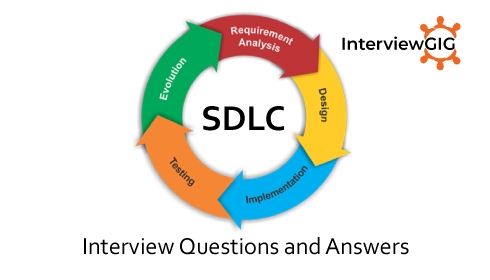
Software Development Life Cycle Models
Software Development Models are structured frameworks that guide the planning, execution, and delivery of software projects. They define the sequence of development stages, such as requirements, design, coding, testing, and deployment.
Stage 3: Designing Architecture
The requirements are turned into a technical blueprint. This phase defines the overall system architecture and technology stack.
- High-Level Design (HLD): Defines the architecture, database design, and relationships between modules.
- Low-Level Design (LLD): Defines the logic of individual components, API interfaces, and database tables.
- Output: Design Document Specification (DDS).
- Key Players: System Architects, Lead Developers.

30 Most Frequently Asked SDLC Interview Questions and Answers
FAQ
How to explain SDLC in an interview?
Sample answer: SDLC offers a structured approach to software development, efficient planning, and organisation of tasks for developers. It identifies potential risks and issues in the software development process that helps developers take proactive measures, significantly reducing overall costs.