Hey there, design fam! If you’re gearin’ up for a job interview in the UI/UX world, chances are you’re gonna face a barrage of Figma interview questions And lemme tell ya, nailing these can be the difference between landin’ that dream gig or gettin’ stuck in the “we’ll call you” limbo At our lil’ corner of the design universe, we’ve seen how Figma has become the go-to tool for creatives, and interviewers are obsessed with knowin’ how well you wield it. So, I’m here to break it all down—simple, straight-up, and packed with tips to make you shine.
Figma ain’t just a design tool; it’s a whole vibe It’s cloud-based, collaborative, and lets you whip up everything from wireframes to interactive prototypes without breakin’ a sweat Companies love it ‘cause it streamlines teamwork, especially in remote setups. That’s why interviewers wanna see if you can handle its features, think on your feet, and bring their projects to life. In this guide, we’re divin’ deep into the kinda questions you might face, how to answer ‘em with confidence, and some insider tricks to prep like a boss.
Why Figma Skills Are a Big Deal in Interviews
Before we jump into the nitty-gritty, let’s chat about why Figma is such a hot topic in design interviews. It’s not just about drawin’ pretty pictures—Figma is about problem-solvin’, collaboration, and creatin’ designs that actually work across devices. Employers wanna know if you can:
- Build responsive designs that look dope on any screen size.
- Collaborate in real-time with teams spread across the globe.
- Prototype like a pro to show off user flows and interactions.
- Organize complex projects without losin’ your mind.
Masterin’ Figma shows you’re not just a designer—you’re a team player who gets stuff done. So, let’s get into the types of questions you’ll likely face and how to tackle ‘em head-on.
Categories of Figma Interview Questions You Gotta Prep For
Interviewers don’t just throw random stuff at ya; they usually test specific skills. I’ve broken down the most common Figma interview questions into categories so you can focus your prep where it counts.
1. Technical Know-How: The Nuts and Bolts of Figma
These questions dig into your ability to use Figma’s features. They wanna see if you know the tool inside out. Here’s what to expect:
- Responsive Design: How do you make sure your designs adapt to different screen sizes?
- Prototyping Skills: Can you create interactive mockups that mimic real user experiences?
- Components and Styles: How do you manage reusable elements to keep designs consistent?
- Exporting Assets: Do you know how to prep files for developers in the right formats?
2. Process and Workflow: How You Get Stuff Done
This is about your approach to designin’ with Figma. Interviewers are curious about your process from brainstorm to final handoff.
- Design Process: Walk us through how you start a project in Figma.
- Wireframing: How do you use Figma to sketch out initial ideas?
- Version Control: How do you handle multiple iterations or roll back changes?
3. Collaboration and Teamwork: Playin’ Nice with Others
Since Figma’s big on real-time teamwork, expect questions about how you work with others.
- Feedback Loops: How do you gather and apply feedback in Figma?
- Co-Editing: Tell us about a time you worked on a design with teammates simultaneously.
- Client Communication: How do you keep stakeholders in the loop using Figma?
4. Behavioral and Experience-Based: Your Figma Stories
These are the “tell me about a time” questions. They wanna hear real examples of you usin’ Figma on projects.
- Project Examples: Describe a project where you used Figma from start to finish.
- Challenges Faced: What’s a tough Figma issue you ran into, and how’d ya fix it?
- Brand Guidelines: How have you stuck to strict design rules in Figma?
5. Advanced Features: Showin’ Off Your Figma Swagger
If you’re goin’ for a senior role, they might grill ya on the fancy stuff.
- Design Systems: Have you built a full design system in Figma?
- Vector Networks: How comfy are you with creatin’ complex shapes?
- Plugins: Which Figma plugins do you use to speed things up?
Sample Figma Interview Questions with Killer Answers
Now, let’s get into some specific questions you might hear and how I’d answer ‘em. I’ve picked a mix from each category to give ya a solid startin’ point. Feel free to tweak these based on your own experiences, ‘cause authenticity wins every time.
| Question | Category | Sample Answer |
|---|---|---|
| How do you approach responsive design in Figma? | Technical | I start by usin’ frames as containers, kinda like CSS boxes, settin’ constraints so elements stick where I want ‘em when the screen size changes. Auto Layout is my bestie—it lets stuff expand or shrink based on content. I always test with prototypes to see how it looks on different viewports, startin’ from mobile and scalin’ up. Grids help me keep alignment tight. This way, my designs stay sharp no matter the device. |
| Walk us through your process for a new design in Figma. | Process/Workflow | First, I dig into research to get the project’s vibe and user needs. Then, I whip up quick wireframes in Figma usin’ basic shapes to map the flow. Once that’s solid, I turn ‘em into high-fidelity mockups, buildin’ components for consistency. I play with colors and fonts ‘til it feels right, then prototype to test interactions. I share it with the team for feedback right in Figma, tweak as needed, and keep iteratin’ ‘til it’s perfect. |
| How do you gather feedback in Figma? | Collaboration | I share a link to my design file with the team or clients, lettin’ ‘em drop comments right on the elements. Figma’s comment panel keeps it all organized, so I can reply or resolve ‘em one by one. If we need a deeper chat, we hop into a live session to edit together in real-time. It cuts down on miscommunication and speeds up the whole process. |
| Describe a project where you used Figma end-to-end. | Behavioral | I worked on revampin’ a fitness app’s UI. Started brainstormin’ in Figma with rough sketches and user flows. Moved to detailed wireframes, got sign-off, then built high-fidelity designs with a shared style guide for colors and text. Prototyped the whole user journey to spot issues, and finally handed off assets to devs usin’ export tools and inspect mode. Figma kept everyone synced with comments at every step. |
| Have you built a design system in Figma? | Advanced Features | Yup, I’ve set up a design system for a client’s web and mobile apps. Defined colors, typography, and grids as shared styles, then created master components for buttons, inputs, and cards with variants for different states. Organized ‘em into pages like “Navigation” for easy access. It was a game-changer—kept designs consistent and made updates a breeze across all files. |
These answers ain’t just rote responses; they show practical know-how and a personal touch. When you answer, throw in your own flair—maybe a quirky project detail or a lesson learned. Interviewers eat that stuff up.
Deep Dive: Breakin’ Down Key Figma Skills to Highlight
Let’s zoom in on some core areas that pop up a lot in Figma interview questions. I wanna make sure you’ve got these locked down, ‘cause they’re often the make-or-break points.
Responsive Design: Adapt or Die
Interviewers wanna know you can make designs that don’t flop on tiny phones or massive monitors. Here’s how I roll with it in Figma:
- Frames as Your Foundation: Think of frames as your layout boxes. Set constraints to pin elements (like a logo) to a corner or center ‘em as the frame resizes.
- Auto Layout Magic: This feature is a lifesaver. If a button’s text changes, the button auto-adjusts. Same for lists—add an item, and spacing stays consistent.
- Test, Test, Test: Use prototypes to preview how your design shifts across viewports. I start small (mobile) and scale up, fixin’ any weird overlaps or gaps.
Pro tip: Mention how you use grids for alignment. It shows you’re detail-obsessed, which interviewers love.
Prototyping: Bringin’ Designs to Life
Figma’s prototyping tool lets you simulate user experiences, and trust me, they’ll ask about it. Here’s what to focus on:
- Linkin’ Frames: Connect screens to show navigation—like clickin’ a button to open a menu.
- Interactions: Set triggers (click, hover) and animations (smart animate is dope for smooth transitions).
- User Testin’: Share prototypes with users to spot pain points early. I’ve caught clunky flows this way before a client even saw ‘em.
When answerin’, share a quick story of a prototype that wowed a stakeholder or fixed a major issue. It proves impact.
Collaboration: Teamwork Makes the Dream Work
Figma’s real-time collab features are a big reason companies use it. Be ready to talk about:
- Live Edits: How you’ve worked with a teammate on the same file, seein’ each other’s cursors move.
- Commentin’ System: Droppin’ pins on designs for specific feedback, keepin’ convos clear.
- Asynchronous Wins: Workin’ with clients in different time zones, lettin’ ‘em review at their pace while you sleep.
I once had a client halfway across the world, and Figma’s comment system saved us from endless email chains. Stories like that show you get the tool’s power.
Components and Design Systems: Efficiency is Key
Reusable components and styles are Figma’s bread and butter for consistency. Here’s how to impress:
- Master Components: Create one button, tweak it, and watch every instance update. I’ve saved hours this way on big projects.
- Variants: One component, multiple states (hover, disabled). It’s like magic for UI consistency.
- Team Libraries: Organize components so everyone can grab ‘em. I name stuff super clear, like “Button/Primary,” so there’s no guessin’.
Mention how this speeds up workflows and keeps designs tight. It screams “I’m organized AF.”
Prep Tips to Ace Figma Interview Questions
Knowin’ the questions is half the battle; the other half is prep. Here’s how I’d get ready to crush it, and you should too:
- Practice Hands-On: Open Figma and mess around with features like Auto Layout or prototyping. Build a quick app UI to refresh your skills. Muscle memory helps when you’re nervous.
- Mock Interviews: Grab a buddy and run through the questions above. Stumblin’ over words in practice means you’ll be smoother on game day.
- Build a Portfolio Piece: Create a Figma project that shows off responsive design, a prototype, and a mini design system. Link it in your interview to prove your chops.
- Know Your Stories: Jot down 3-4 projects where Figma played a big role. Note challenges, solutions, and results. Personal tales stick better than generic answers.
- Stay Updated: Figma rolls out new stuff all the time. Check their blog or Twitter for updates. Droppin’ a “I’m excited about the latest Smart Animate tweak” shows you’re in the loop.
- Brush Up on Basics: If you’re rusty, watch a quick tutorial on frames or components. Don’t get caught blankin’ on somethin’ simple.
One time, I flubbed a question on vector networks ‘cause I hadn’t touched ‘em in months. Lesson learned—review everything, even the niche bits.
Common Pitfalls to Dodge Durin’ Interviews
Even with solid prep, it’s easy to trip up. Here’s some mistakes I’ve made (or seen others make) and how to avoid ‘em:
- Over-Techy Jargon: Don’t ramble about “nested frames” if the interviewer ain’t technical. Explain in plain English, like “I group elements to keep things tidy.”
- No Examples: Sayin’ “I know prototyping” without a story is weak. Always back it up with a real project moment.
- Ignorin’ Teamwork: Figma’s collab features are huge. If you skip mentionin’ how you work with others, you’re missin’ a big sellin’ point.
- Not Admittin’ Gaps: If you don’t know somethin’, don’t fake it. Say, “I haven’t used that feature much, but I’m eager to learn and here’s how I’d approach it.” Honesty wins.
I once tried to BS my way through a design system question and got called out. Brutal. Just be real, y’all.
Bonus: Figma Features That Might Sneak Into Questions
Some less obvious Figma bits might pop up, especially for advanced roles. Here’s a quick rundown to keep in your back pocket:
- Vector Networks: Great for custom icons or shapes. You can tweak paths in one layer without losin’ the original. I’ve used it for funky illustrations.
- Plugins: Tools like Unsplash for images or Content Reel for dummy data. Mention how they speed up mundane tasks.
- Smart Animate: Auto-animates between frames for slick transitions. I’ve wowed clients with this in prototypes.
- File Organization: Usin’ pages and naming conventions to keep huge projects sane. I split wireframes and final designs into separate pages for clarity.
Droppin’ these shows you’ve got depth. Don’t overdo it, though—only bring ‘em up if relevant.
Wrappin’ It Up: Your Path to Figma Interview Glory
Look, interviews can be scary as heck, but with Figma in your toolkit, you’ve got a serious edge. We’ve covered the main question types—technical, process, collaboration, and more—plus sample answers and prep tips to get ya ready. Remember, it ain’t just about knowin’ the tool; it’s about showin’ how you solve problems, work with teams, and bring ideas to life.
So, take a deep breath, dive into Figma, and practice those answers ‘til they roll off your tongue. Share your unique experiences, be real about what you’ve learned, and don’t be afraid to show passion for design. I’ve been through my fair share of sweaty-palm interviews, and trust me, confidence and prep are everything. You’ve got this—go out there and land that design role like the rockstar you are! If you’ve got a fave Figma trick or interview story, drop it in the comments. Let’s keep this convo goin’!
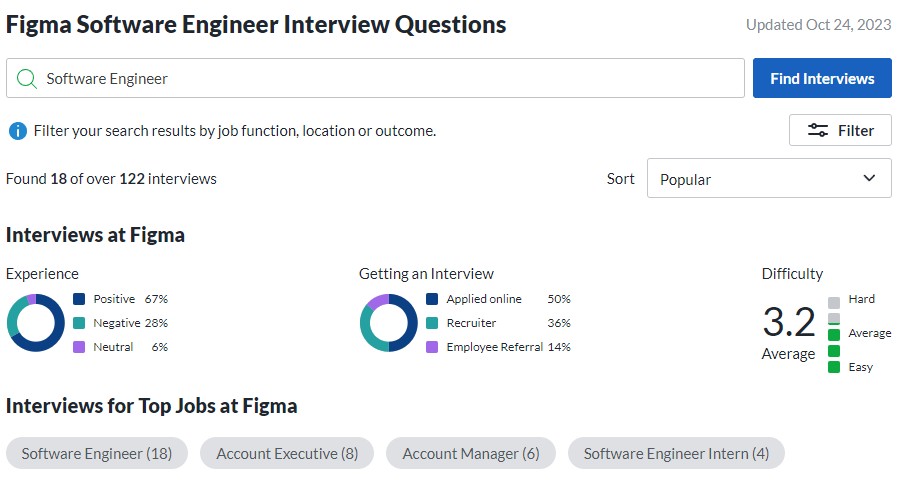
Step 1: Recruiter Call
Figma’s recruiter call lasts 30 minutes, and it’s pretty standard fare – they’ll ask you about your previous experience, why you’re interested in Figma, your understanding of Figma’s value proposition, and what you’re looking for moving forward.
It’s really important, at this stage, to not reveal your salary expectations or where you are in the process with other companies. We’ve written a detailed post about salary negotiation that lays out exactly what to say if recruiters pressure you to name the first number.
[Staff-level or Close to It] Step 5: Executive Screen
If you’re interviewing for a Staff level role, or quite senior and on the cusp of Staff, they will do one more round after the onsite. It is a behavioral round with a Director. They might tell you this is a casual chat, but one engineer said:
Figma Interview Questions – Complete Guide to Design Systems & Collaboration
0